
Installing outdoor electronics—whether it’s a high-end landscape lighting system, a robotic mower boundary, or an invisible dog fence—usually presents a frustrating dilemma: How do you get the wire underground without destroying your grass?
Traditional trenching involves heavy shovels, piles of dirt, and weeks of waiting for “scar tissue” in your lawn to heal. A Wire Burying Tool (also known as a cable burial tool or lawn edger installer) is the surgical alternative. This guide explores everything you need to know about selecting, using, and mastering this essential DIY tool.
What Exactly is a Wire Burying Tool?
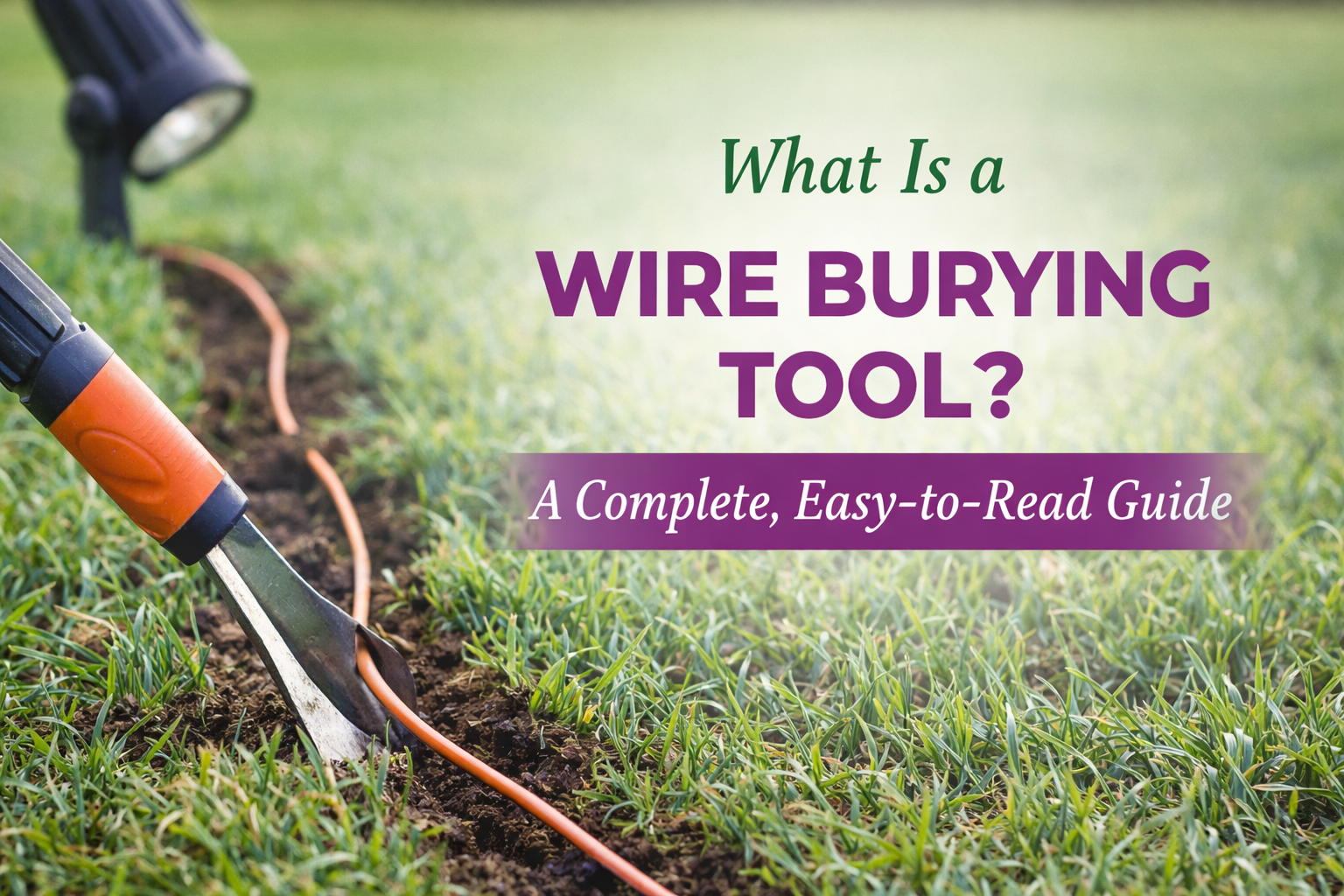
At its core, a wire burying tool is a specialized manual or rolling instrument designed to create a “zero-displacement” slit in the turf. Unlike a spade, which removes a wedge of dirt, this tool slices the soil fibers and pushes them aside just enough to allow a low-voltage wire to be inserted.
How it works:
- The Slice: A thin, hardened steel blade cuts through the thatch and root layer.
- The Insertion: Many tools feature a “feeding loop” or a hollow channel that guides the wire directly into the bottom of the slit as you move.
- The Seal: Because no dirt was removed, the natural elasticity of the grass and soil causes the slit to close almost immediately once pressure is applied by your foot.
When to Use One (and When to Avoid It)
While incredibly versatile, these tools are designed for specific “Low-Voltage” applications.
Perfect For:
- Landscape Lighting: Running 12V–24V power to LED path lights or spotlights.
- Invisible Pet Fences: Burying the transmitter loop around your property perimeter.
- Sprinkler Systems: Hiding the thin control wires that connect valves to the main timer.
- Outdoor Audio: Running speaker wire to rock speakers or poolside sound systems.
- Robotic Mowers: Installing the boundary and guide wires required for automated mowers.
Avoid Using For:
- High-Voltage (120V+): Standard household power for outdoor outlets must be buried significantly deeper (usually 18–24 inches) inside rigid conduit to meet National Electrical Code (NEC) safety standards.
- Rocky or Root-Choked Soil: In extremely rocky terrain, the thin blades can bend or chip.
Deep Dive: Types of Wire Burying Tools
Choosing the right tool depends on the length of your run and the hardness of your soil.
A. Manual “T-Handle” Slit Tools
These look like a narrow spade with a foot stirrup. You step on the tool to create a slit, move it a few inches, and repeat.
- Best for: Short runs (under 50 feet), tight garden corners, and working around delicate flower beds.
- Pros: Inexpensive, indestructible, and offers maximum control.
B. Rolling/Rotary Burial Tools
These feature a circular blade on an axle. As you push the tool, the wheel slices the ground. Many professional models have a spool holder that feeds the wire automatically.
- Best for: Long perimeters (invisible fences) and straight runs across open lawns.
- Pros: Extremely fast; can cover 100 feet in minutes.
C. The “Half-Moon” Modified Edger
Many homeowners use a standard lawn edger. While it lacks a wire-feeding mechanism, it is a cost-effective way to pre-cut a path before manually tucking the wire in with a paint stirrer or wooden wedge.
The Professional’s 5-Step Installation Process
To achieve an “invisible” finish, follow this professional workflow:
Step 1: Soil Prepping
The biggest mistake beginners make is trying to cut into bone-dry, compacted soil. If the ground is hard, water your lawn thoroughly 24 hours before you begin. The moisture lubricates the blade and allows the soil to “heal” faster after the wire is in.
Step 2: Path Marking
Use “flagging tape” or a can of upside-down marking paint to map your route. Crucial: Call 811 (in the US) or your local utility marking service to ensure you aren’t crossing paths with existing gas, water, or fiber-optic lines.
Step 3: The Initial Cut
Start at the power source (the transformer or transmitter). If using a manual tool, drive the blade roughly 2–3 inches deep. If using a rolling tool, maintain a steady walking pace to ensure the depth remains consistent.
Step 4: Seating the Wire
Ensure the wire sits at the very bottom of the slit. If the wire “floats” halfway up, it is susceptible to being nicked by an aerator or a power edger later. Use the tool’s integrated feeder or a blunt wooden stick to push the wire down.
Step 5: The “Tamp”
Walk along the path of the wire, putting your full weight on your heel to press the slit closed. For a truly professional finish, lightly spray the path with water one last time to help the grass roots re-knit.
Maintenance and Longevity
A wire burying tool is an investment. To keep it in peak condition:
- Edge Sharpening: Use a metal file to keep the leading edge sharp. A dull blade requires twice the physical effort to push.
- Rust Prevention: After use, wipe the blade clean of mud and spray it with a light coat of WD-40 or silicone lubricant.
- Check the Guides: If your tool has a wire-feed tube, ensure no grit or dried mud is clogging it, which can strip the insulation off your wire.
Summary: Why It Beats the Shovel
| Feature | Wire Burying Tool | Traditional Trenching |
|---|---|---|
| Physical Strain | Low (Upper body/Legs) | High (Full body/Back) |
| Landscape Recovery | Instant | 2–4 Weeks |
| Tool Cost | $30 – $150 | $50 (Shovel) – $200 (Rental) |
| Average Speed | 20 mins per 100 ft | 3 hours per 100 ft |
Final Thoughts
The wire burying tool is the ultimate “work smarter, not harder” device for the modern homeowner. By preserving the integrity of your turf and protecting your cables from the elements, it ensures your outdoor projects look professional and last for years.